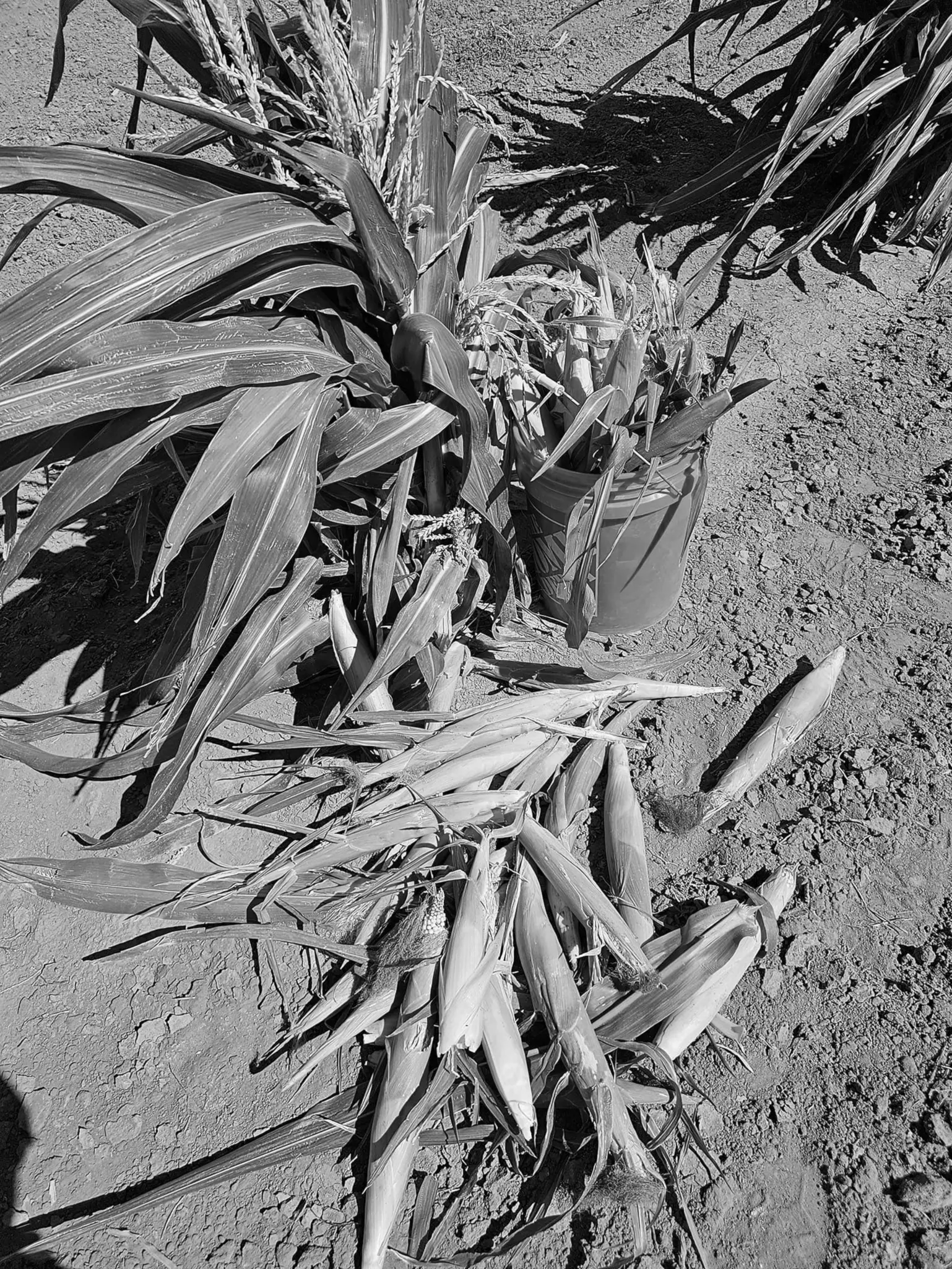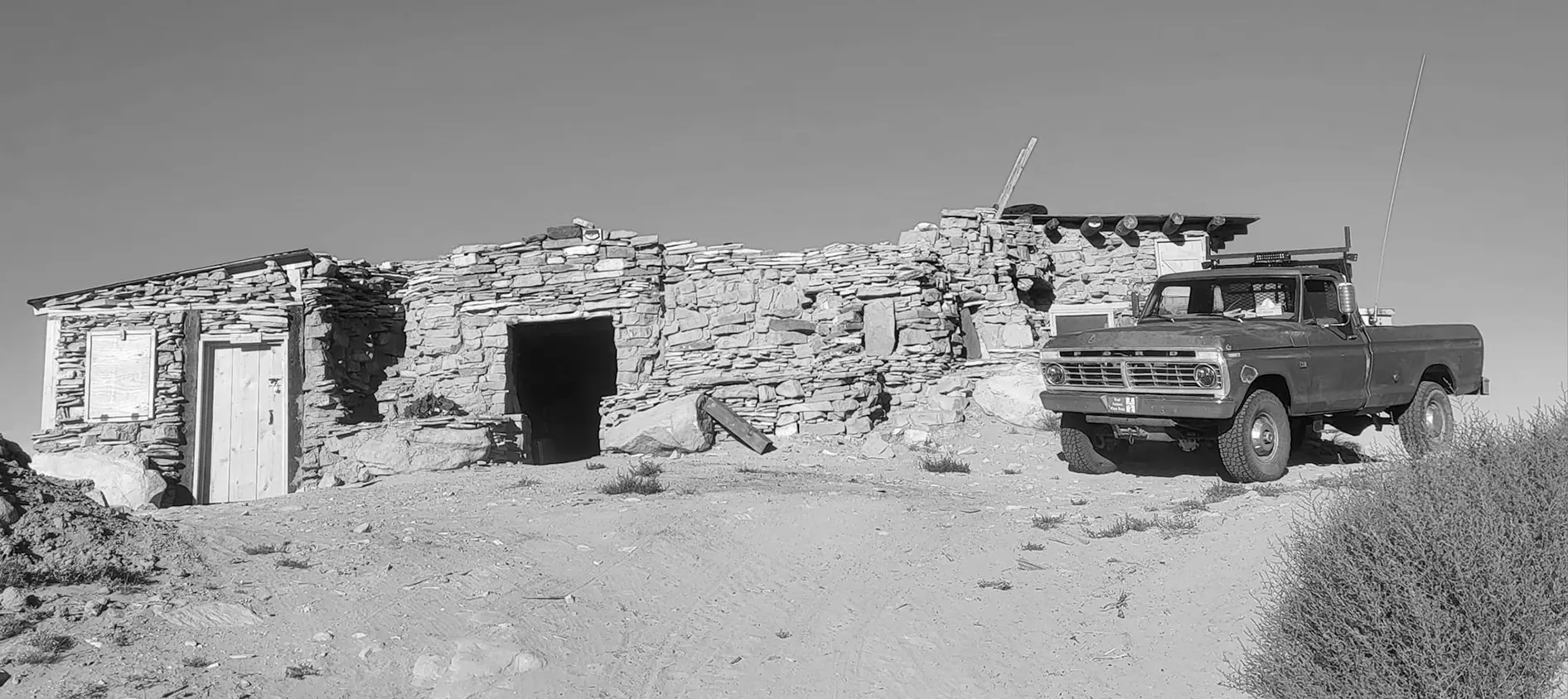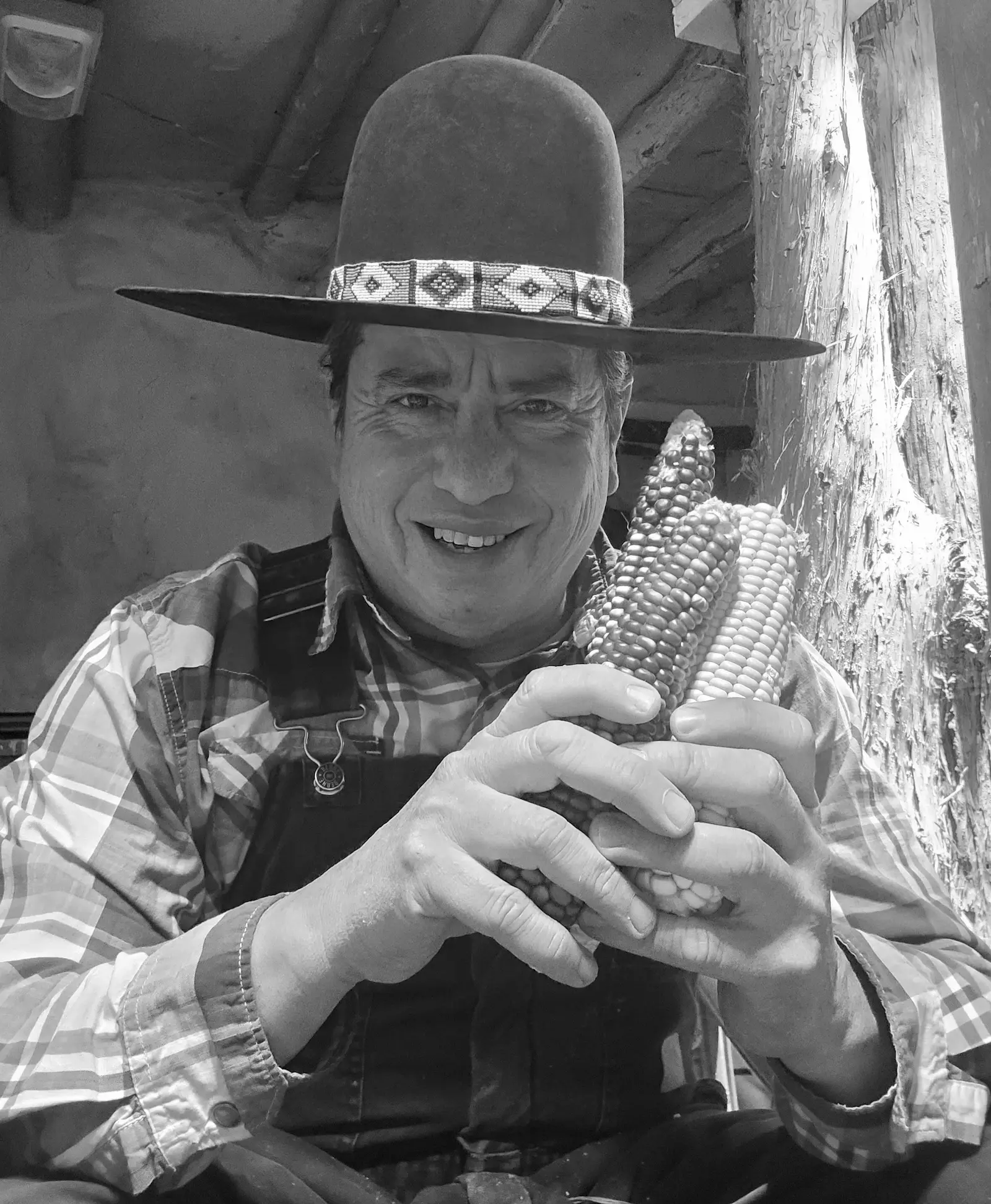
My name is Michael Kotutwa Johnson and I am a 250th generational traditional Hopi farmer. I follow in the footsteps of my father, as he has his, and his father before for generations. When my people first came to the region now called the Colorado Plateau located in northern Arizona many centuries ago, it was said we met an individual called Massau. He was the guardian of the earth. Massau gave us specific instructions on how we should live our life so we could survive in the semi-arid lands we call our home. He provided us with a planting stick, seeds, and a gourd of water. However, the most important instruction is to have faith in all we do. Today, more than ever I find myself continuing to follow his instructions.
The main reason I follow the instruction based on faith is that we have had extreme drought for the past several years. The drought we are experiencing I believe is caused by climate fluctuations or some would say climate change. For example, our planting season has been getting smaller with colder temperatures in April when we plant and earlier freezes towards the end of the agriculture season. At the same time, we have also had hotter than usual summers.
The hotter summers at times cause higher rates of evaporation and stunt the plants. This is sometimes difficult to overcome because as a Hopi farmer it is not our custom to irrigate, we are dependent on moisture that comes in the form of monsoon rains and winter snowfall. Annually, we only receive 6 to 10 inches of precipitation. Over the past several years, I have noticed that we have had about half of that and at times less. Again, this may be due to climate change or the stress the earth feels from constant extraction and not being cared for. As a result of the lack of moisture I do not always raise a crop which mainly consists of different varieties of beans, gourds, corn, melons, and squash. What I do manage to raise is given to the women and they set aside some of what is produced for seeds to either store or plant for the following year. Traditionally the women of Hopi own the fields, provide the seeds to be planted, and receive the harvest for distribution. They play a significant role in our agriculture lifestyle. It should also be known there is no separation between Hopi culture and spiritual beliefs and our agriculture. They are one and the same and depend on each other.
For example, the white corn that is raised once harvested and dried is then ground by the women and turned into corn meal that is used to offer prayers and incorporated into our ceremonies. Our corn, whether in the form of seeds or those seeds left intact on the cob, is touched several times from preparation to harvest and then storage. We have a saying at Hopi: “We are like corn.” The corn we raise is nurtured and an intimate relationship established because we depend on each other for survival. Not only from the physical sense, but also from the deep embedded spiritual and mental challenges we face as Hopi farmers and people who have survived in the semi-arid Southwest since time immemorial.
Another example of the faith I mentioned is that no matter what I and other Hopi farmers see in terms of vegetative plants in the springtime, which are used to determine how successful or unsuccessful our crops may be, we plant anyway. In the spring of 2018, I saw a complete absence of the natural soil moisture indicators caused by lack of snowfall the previous winter, but planted anyway. I did not plant my whole field but part of it. The seeds I planted lay dormant in the ground from early May to the end of July. However, at the end of July we received a tremendous amount of rain from the monsoon rains that are common in our area during the late summer. Two weeks later, the seed I planted demonstrated faith of its own by emerging from deeper than usual depths of around 14 inches. I was able to harvest what was grown and distributed the fresh corn in October.
Today, apart from my own world at Hopi, subjects like faith and value are often frowned upon by those who wish to do so and those values which some call social determinants are replaced by numbers. For example, agriculture products are measured by the United States Department of Agriculture (USDA) market formulas based on quantity and efficiency. In other words, how much is produced and what is the best way to produce more in a cost-effective manner. As a result of this type of market system and techniques such as soil amendments (N, P, and K), herbicides, and pesticides, a majority of agriculture products (corn, wheat, soy, rice, sugarcane, etc.) have lost their nutritional value. In essence they have lost their soul.
Another example can be found in the regenerative movement that is taking hold across the globe with good intentions, but unlike Indigenous culturally based agriculture systems is also diminished and focuses on techniques and processes that over the long term will not be sustainable, as it still relies on science and a funding mechanism. I present a comparison example between a common definition of Regenerative Agriculture and the other, which I will frame for context below.
| Regenerative Agriculture | Indigenous Regenerative Agriculture |
| Regenerative agriculture is a holistic systems approach that starts with the soil, and includes the health of the animals, farmers, workers, and community. (Dr. Urvashi Rangan, 2019) | Indigenous regenerative agriculture is the process of incorporating Indigenous place-based ways of knowing and land use management schemes adapted for survival which are supported by culture, belief systems, and community, incorporated over millennia. (Dr. Michael Kotutwa Johnson, 2022) |
At the heart of Indigenous agriculture systems and what makes them so resilient, and why as much as 80 percent of the globe’s biodiversity now sits on 25 percent of the land managed by Indigenous people, is the fact that they are based on the different Indigenous culture belief systems that help define the relationship between humans and the natural world (i.e., the environment). This relationship is further defined by the discipline needed to enact these belief systems to maintain the very delicate balance between nature and human intervention. I make the case that without this type of relationship, and with a lack of this discipline, science in all its forms will only be good to watch, delay, and calculate our own demise. Nature in its own way and the values it places on itself will adapt and take whatever form needed to adapt on its own even in periods of environmental fluctuations as seen by climate change and will continue to do so over time. Unfortunately, we as human beings have not made the necessary adjustments in terms of mere “will” and policy. Why?
I believe the “Why?” question can be answered in terms of what my grandfather once told me on the way to pick up some of our relatives to help us in the field who did not want to go. He said: “No need to worry Michael if they do not want to help; their heart is not there, they would be no use to us and thus no use to our plants also.” It’s that type of relationship that I am stressing. I must argue in some way that values/discipline must become incorporated into the process of environmental management at all levels, including agriculture management associated with the major global crops, both of which are needed to increase the biodiversity that has steadily been lost.
In conclusion, values are part of us as a society and they differentiate across societies, as well as individuals. Is there one person’s values or a specific society’s values that should be used to make key decisions moving forward? The answer is “no.” It is a combination of values from all different levels that needs to be incorporated in our environmental management system because inside each one may be the discipline needed to truly not only stop environmental degradation and deal with climate change but slow down those agriculture market-based systems that run on models of quantity and efficiency. In today’s world I find that most of the scientific community base their work on reductionist theory and solutions. The problem is that reductionism often does not lead to long-term solutions but temporary fixes and in turn we continue to try to solve the same problem with the same unwanted result. Nature and her unique system often recovers even without human intervention and only when we begin to understand our relationship with her will long-term solutions be found.